
1
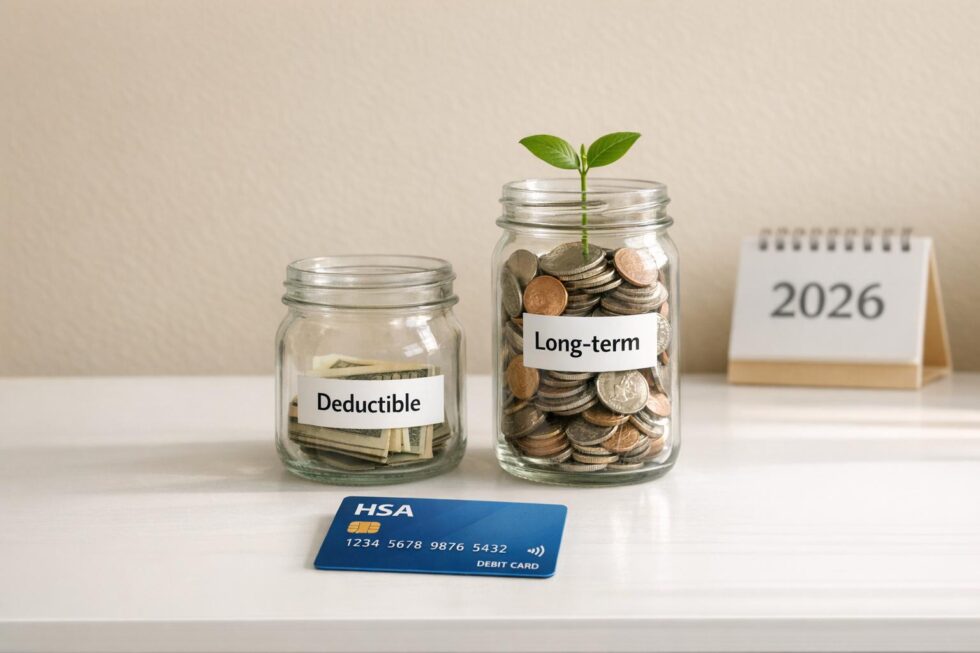
Health savings accounts are frequently marketed as tools for paying next week’s doctor copay or funding an unexpected prescription refill. While using an account for short-term medical expenses provides immediate tax relief, treating it solely as a digital checking account leaves a staggering amount of long-term financial potential on the table. When approached strategically, a health savings account functions as one of the most powerful wealth-building vehicles available, combining tax-deductible contributions, tax-free growth, and tax-free withdrawals for qualified medical expenses.
Unlocking that hidden power requires moving your money out of low-yield cash options and into investments designed for long-term growth. Navigating investment allocations can feel intimidating, especially when balancing health unpredictability with retirement horizons. Building a resilient strategy means understanding how to align your portfolio selections with your personal timeline, risk tolerance, and future healthcare obligations.
The Triple Tax Advantage and Why Growth Matters
Before diving into asset allocation strategies, it helps to recognize why investing inside this specific account structure matters so much. A health savings account boasts what financial planners call a triple tax advantage. Contributions go in pre-tax or tax-deductible, reducing your adjusted gross income for the year. The money grows entirely tax-free from capital gains, dividends, and interest. Finally, withdrawals are completely tax-free as long as they cover qualified medical expenses.
If you leave your money sitting in cash, you miss out on decades of compound growth. Healthcare costs almost always rise faster than general inflation, and medical expenses in retirement frequently represent one of the largest single budgetary line items for older adults. By investing your balance into equity and fixed-income assets, you harness the power of compounding to build a dedicated healthcare fund that can support you decades down the road.
Determining Your Investment Threshold
Most providers require you to maintain a minimum cash balance before you can begin investing the remainder of your funds. This cash threshold might range from one thousand to two thousand dollars. Beyond that minimum, every dollar can be directed toward mutual funds, exchange-traded funds, or index funds.
Deciding how much to invest versus how much to keep in cash depends on your current health status and your liquidity needs. If you have chronic conditions, young children, or anticipate upcoming surgeries, keeping a larger buffer in cash makes sense. If you are generally healthy, can comfortably pay out-of-pocket medical bills from your regular monthly cash flow, and view the account strictly as a long-term retirement health fund, you can invest nearly your entire balance.
Aligning Allocation with Your Time Horizon
Your investment strategy should be anchored primarily by your timeline. How far away are you from retirement, and when do you expect to tap into these funds for medical costs?
Long Horizons and Aggressive Growth
If you are in your twenties, thirties, or forties, your investment horizon spans decades. In this scenario, adopting an aggressive growth posture—typically heavy on equities—makes mathematical sense. Broad-market stock index funds or exchange-traded funds that track major domestic and international indexes provide the growth engine necessary to outpace healthcare inflation. Short-term market volatility matters far less when you have twenty or thirty years for your investments to recover and compound.
Approaching Retirement and Moderate Strategies
As you draw closer to retirement age, your strategy should shift to preserve capital while still fighting inflation. Transitioning toward a moderate allocation introduces fixed-income assets, such as Treasury bonds or corporate bond funds, alongside a core equity holding. This balance cushions the portfolio against steep market downturns right at the moment when you might actually start drawing down funds for healthcare in retirement.
Retirement and Healthcare Preservation
Once you reach retirement age, your relationship with the account changes again. At age sixty-five, you can withdraw funds penalty-free for any purpose, though non-medical withdrawals are subject to ordinary income tax. Qualified medical expenses remain entirely tax-free. Many retirees maintain a balanced or conservative allocation during this phase, ensuring that funds for near-term healthcare needs remain stable while a portion remains invested to cover potential long-term care costs decades into the future.
Core Asset Classes for Building Your Portfolio
When selecting funds within your provider platform, keeping your strategy simple and low-cost yields the best results over time. You do not need a complicated arrangement of dozens of niche sector funds to achieve strong performance.
Broad-Market Equity Index Funds
The foundation of any growth-oriented portfolio should be low-cost, broad-market stock index funds. These funds give you instant diversification across hundreds or thousands of individual companies spanning technology, finance, consumer goods, and healthcare. Because management fees can drag down returns over long periods, prioritizing funds with low expense ratios keeps more money working for your future.
International Exposure
Adding international equity funds provides geographic diversification. While domestic markets perform well, global economies operate on different cycles. Including developed and emerging market funds helps smooth out returns and protects your portfolio against domestic economic headwinds.
Fixed Income and Bond Funds
As you incorporate stability into your asset mix, bond funds come into play. Government and aggregate bond funds provide steady income and tend to hold their value better during severe stock market corrections. However, because healthcare costs inflate rapidly, holding too much in bonds too early can hinder your long-term purchasing power.
Avoiding Common Allocation Pitfalls
Many account holders make strategic mistakes that limit the long-term effectiveness of their portfolios. Recognizing these pitfalls helps you stay on track.
The most common error is keeping 100 percent of the balance in cash out of fear that you might need the money for an unexpected emergency next month. While liquidity is important, treating the account like a traditional savings account forfeits the primary engine of wealth accumulation.
Another frequent misstep is changing your allocation based on short-term market headlines. Panic-selling during a market downturn locks in losses and ruins the compounding effect. A health savings account is inherently a multi-year or multi-decade vehicle; viewing it through a short-term lens encourages reactive decision-making.
Finally, ignoring expense ratios can quietly drain your returns. Always check the internal fees of the funds you select. Paying an extra percentage point in management fees over twenty years strips away thousands of dollars that could have gone toward your future healthcare needs.
Building a Sustainable Routine
Choosing an allocation is not a one-time event; it requires occasional maintenance. Reviewing your portfolio once or twice a year ensures that your asset mix hasn’t drifted too far from your target percentages due to market movements. As you age, gradually shifting your risk profile ensures your strategy adapts to your changing life stage. By treating your health savings account as a serious long-term investment vehicle rather than a simple spending account, you build a robust financial safety net for the future.
